
Anonymous
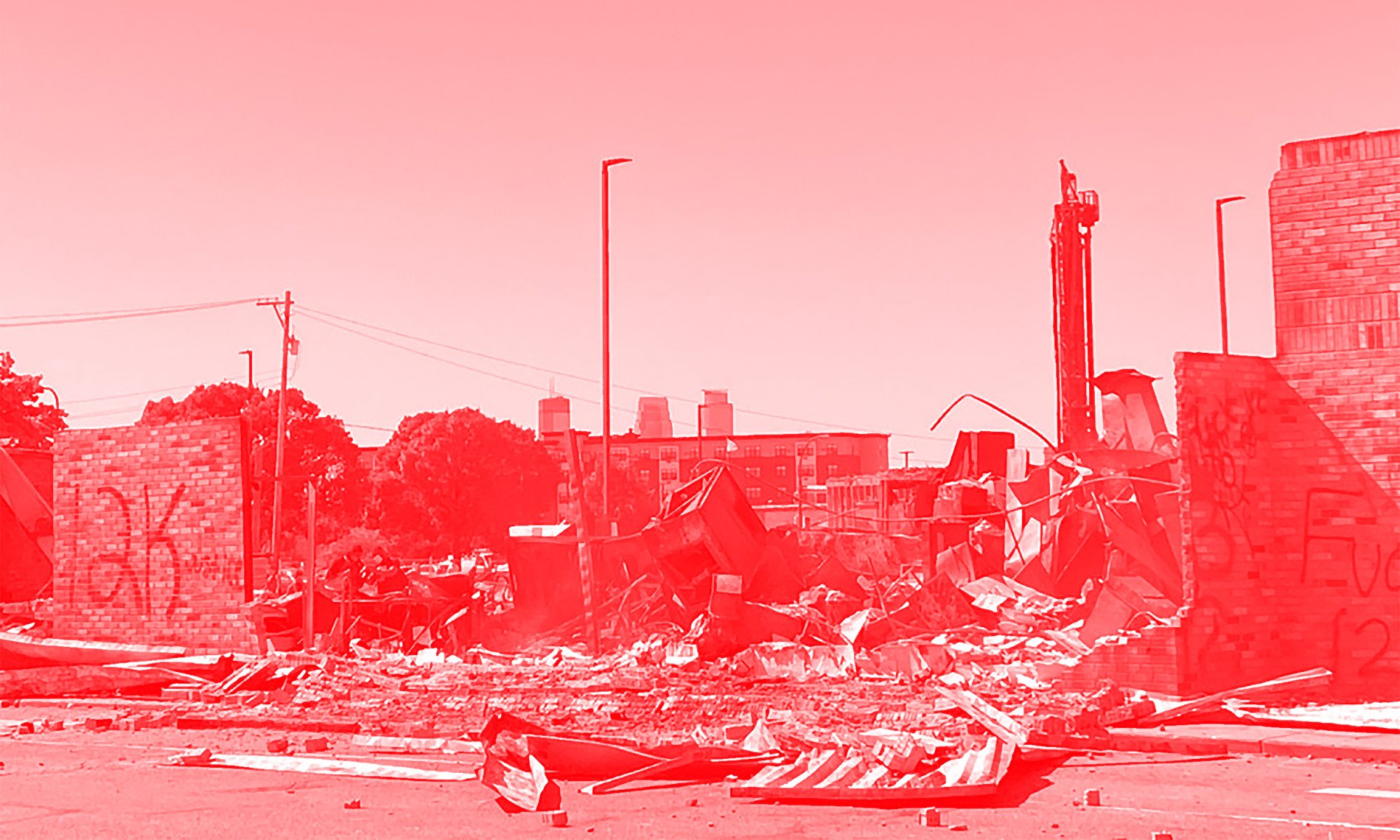
“Brick Rack” anonymous, Minneapolis, MN, 2020 pic.twitter.com/ObIymmS62w
— Vitalist International (@VitalistInt) May 29, 2020
Excerpted commentary from researcher Stephanie Gibson:
As the world grapples with how to deconstruct systems of oppression that have existed for centuries, a grassroots art installation popped up outside of Minneapolis’ third precinct, the birthplace of the global protests calling for justice for deaths of unarmed Black people, including George Floyd and Breonna Taylor, at the hands of American police. Bricks from the now-destroyed AutoZone were salvaged and installed on a rack to form an interactive work of art called Brick Rack. While both Brick Rack and South Africa’s Constitutional Court use bricks salvaged from architectural structures, any similarities end there.
As an interactive work that celebrates the community occupation of the third precinct, Brick Rack challenges systems of oppression and amplifies the voices of the marginalized. Unlike South Africa’s Constitutional Court, Brick Rack does not salvage the bricks from a ruined building in order to redeploy them in a way that ultimately reinforces power structures. The work allows the ruin to speak. It does not attempt to create new meaning out of the salvaged bricks but instead, as an interactive work that celebrates the community occupation of the third precinct, Brick Rack challenges systems of oppression and amplifies Black voices. In doing so, Brick Rack highlights the injustices perpetrated by the police and the systems of oppression that allow injustice to continue. The work magnifies the voices of the community and points our attention towards the systems that need to be dismantled.
(Stephanie Gibson, “Ruins Repurposed: Building Monuments, Dismantling Systems”)